


AAA Gaming - Scarcity by Design
- NathanielCrossdale

- Aug 24, 2025
- 4 min read
Updated: Nov 24, 2025
How Game Studios Manipulate Supply and Demand to Keep Us Hooked (and Paying)... AAA Gaming

With the video game industry being so profit-driven, there is no reason to expect this trend to stop. Not with the way scarcity economics has proven to drive revenues effortlessly.
AAA Titles
In the gilded halls of AAA gaming, scarcity isn't a bug — it's a business model. From vanishing cosmetic bundles to meticulously timed “Battle Pass” expirations, today’s most lucrative games don’t just sell content; they sell absence.
What looks like a limited-edition skin or a fleeting loot drop is, in economic terms, a textbook lesson in constrained supply and hyperactive demand — all engineered. This isn’t just about game balance or design elegance. It’s about how digital worlds are now laboratories for manipulating player behaviour, using scarcity not to simulate reality but to monetise our impulses.
Many of today’s biggest AAA titles—like Fortnite, Call of Duty, and Diablo IV—don’t just entertain, they simulate scarcity in ways that mirror economic manipulation. Through time-limited bundles, seasonal passes, and artificially rare items, these games create urgency and amplify demand, often tapping into psychological cues like FOMO and sunk-cost bias. This isn’t just about game mechanics—it’s a monetisation strategy rooted in microeconomics, designed to keep players engaged, spending, and chasing what may soon disappear.
Grand Theft Auto doesn’t just dabble in scarcity economics—it practically wrote the playbook and has become the undeniable leader in the practice. Rockstar Games has turned GTA Online into a sprawling digital economy where scarcity is engineered with surgical precision. Limited-time vehicles, rotating property discounts, and exclusive content gated behind GTA+ subscriptions all create a sense of urgency and exclusivity. Even quality-of-life features—like the Vinewood Club App—have been locked behind paywalls, turning convenience itself into a scarce commodity. What sets GTA apart is scale and subtlety.
Unlike other franchises that rely on flashy loot boxes or seasonal passes, GTA embeds scarcity into the very architecture of its world. Players grind for in-game currency, speculate on vehicle releases, and chase fleeting opportunities like real-world investors. It’s not just monetisation—it’s a masterclass in digital rent-seeking, where Rockstar profits from both the illusion of rarity and the friction of access.
Player Spending
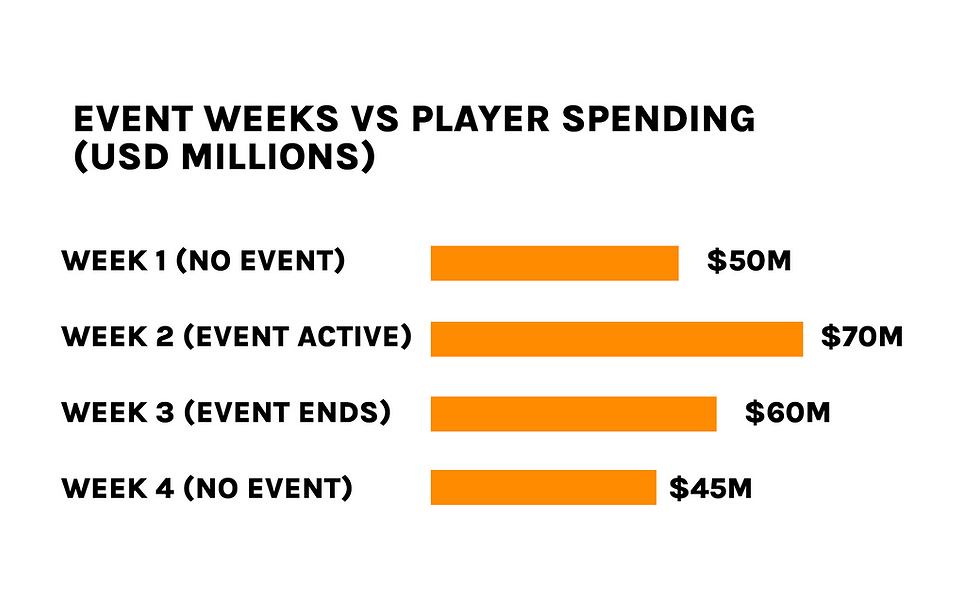
With the video game industry being so profit-driven, there is no reason to expect this trend to stop. Not with the way scarcity economics has proven to drive revenues effortlessly. This graph is based on data from Sensor Tower and Statista, showing how mobile game revenue spikes during limited-time events. Games like Genshin Impact and Fortnite consistently see 20–40% increases in spending when exclusive content is released.
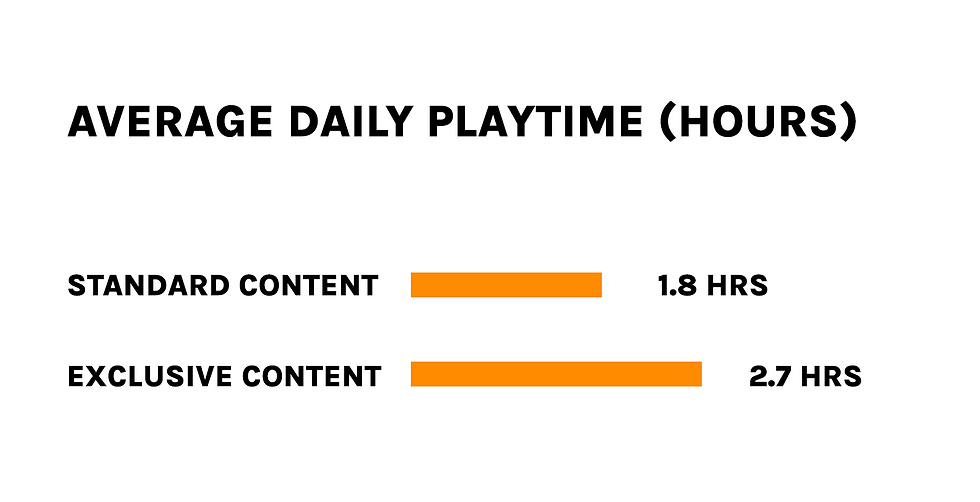
Suppose we want to look at this from a different angle and use engagement metrics from Epic Games and Activision. In that case, this bar chart shows how average daily playtime increases when exclusive skins, weapons, or missions are introduced.
Future
The effectiveness of scarcity economics in this industry is there for all other video game companies not yet using it to see. However, the question must be asked: are there any drawbacks to this?
I believe that the gaming industry is heading for a downward spiral if the trend of scarcity economics in games continues. Not a downward spiral in terms of profits and revenues, but rather the integrity of gaming itself. When progress is throttled to push purchases, core mechanics can feel less rewarding, and players are spending more time navigating monetisation systems than actually playing the game. I also fear that the creative freedom of gaming developers will be hampered by the scarcity economics push in games.
Star Wars Battlefront II is a textbook example of how scarcity economics can constrain creative freedom, especially in its early design phase. When the game launched in 2017, it was heavily criticised for its loot box system, which locked key characters and gameplay advantages behind randomised, time-gated progression. Players had to either grind for dozens of hours or pay to unlock iconic heroes like Darth Vader and Luke Skywalker—characters that arguably should’ve been central to the experience from the start.
This monetisation-first approach warped the game’s design priorities. Instead of crafting a balanced, immersive Star Wars experience, developers were forced to build systems around artificial scarcity and monetised progression. Thankfully, the backlash to this game was severe and created headlines and showed how gamers were only prepared to put up with this form of monetisation for only so long.
Conclusion
At the end of the day, games are supposed to be fun—not a grind or a gamble.
When developers start designing around what makes the most money instead of what makes the best experience, you can feel it. Battlefront II showed us how quickly things can go sideways when creative ideas get boxed in by business models. But it also proved that players will speak up when something feels off. If the industry wants to keep its soul, it needs to put play first—and let creativity lead the way.

Comments