


Will Tottenham Be Relegated?
- TafadzwaIs

- Mar 22
- 5 min read
Tap to Section
What happened?
The idea of Tottenham Hotspur being dragged into a relegation battle would normally sound unthinkable. However, a recent run of poor form has been enough to spark concern, frustration, and more than a few dramatic headlines.

A prolonged collapse in form has left the club hovering just above the Premier League drop zone. A winless run stretching well into 2026 has exposed deep tactical and structural problems, with performances deteriorating sharply under head coach Igor Tudor. Since his appointment, Tottenham have struggled to establish any clear identity, and their defensive record has worsened to the point where they are conceding goals at a rate associated with clubs fighting for survival rather than European places.
Matches that once felt routine have become increasingly fraught, with Spurs frequently losing control of games and suffering late collapses. Tudor’s admission that the squad has “too many bad habits” has only intensified scrutiny, raising questions about both the players’ discipline and the clarity of the coaching. Reports of confusion within the dressing room have added to the sense of instability, while supporters — who have been warning for months that the team was drifting — now find themselves watching a decline that feels both sudden and inevitable. Analysts across the football media have shifted from mild concern to outright alarm, with several warning that Tottenham’s current trajectory is unsustainable without immediate intervention.
Impact

Tottenham Hotspur are majority‑owned by ENIC, the investment group controlled through the Lewis family trust, with long‑time chairman Daniel Levy serving as the public face of the ownership. Despite repeated speculation about a takeover, ENIC have consistently and unequivocally rejected bids, including a reported £4.5bn offer from US tech entrepreneur Brooklyn Earick. The club has repeatedly insisted it is “not for sale,” even after Levy’s resignation fuelled rumours of a shift in ownership strategy. Controversy has grown among supporters, many of whom accuse ENIC of prioritising financial stability over footballing ambition, while analysts note that the club’s large stadium‑related loans may be a major barrier to any future sale.
The consequences of Tottenham’s slide are being felt across every level of the club. Financially, the threat of relegation poses a significant risk to an organisation built on Premier League revenue and global visibility. The Tottenham Hotspur Stadium — a billion‑pound project designed to generate income through matchdays, concerts, and commercial partnerships — relies heavily on top‑flight football to justify its operating costs. Dropping into the Championship would create one of the most severe financial shocks English football has seen, forcing the club to reassess its wage structure and potentially triggering the departure of several high‑profile players whose contracts would be unsustainable outside the Premier League.
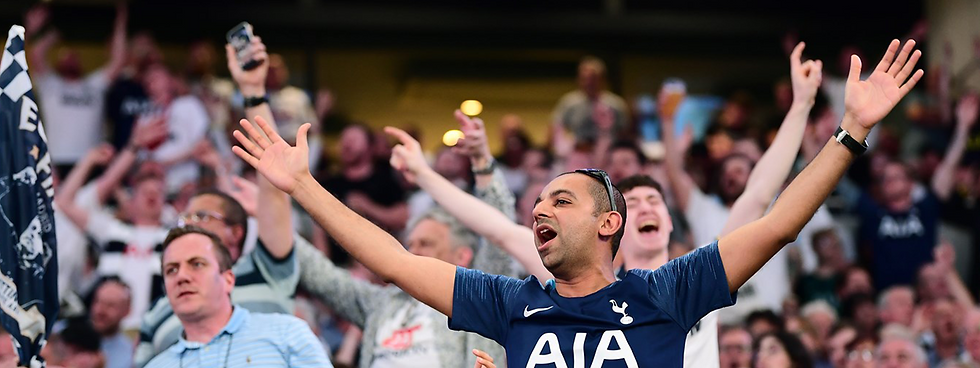
The sporting impact is equally stark. Tottenham’s reputation as a club that regularly competes for European places has already been damaged, and a relegation battle of this magnitude risks reshaping how the club is perceived both domestically and abroad. Supporters have voiced growing frustration with the club’s leadership, questioning recruitment decisions, managerial appointments, and the broader strategic direction. The emotional toll on fans has been significant, with many expressing disbelief that a club of Tottenham’s stature could fall into such a precarious position.
Future
Tottenham’s immediate future hinges on whether the team can halt its decline in the final stretch of the season. Survival remains possible, but the margin for error is shrinking with each passing match. A short run of positive results could lift the club out of danger, yet such a turnaround would require a level of organisation and resilience that has been missing for months. The question of whether Igor Tudor will remain in charge is becoming increasingly pressing. While the club has publicly stated that there are no immediate plans to dismiss him, pressure is mounting, and a managerial change could still be made if results continue to worsen.
If the worst‑case scenario unfolds and Tottenham are relegated, the medium‑term consequences would be profound. The Championship League is a notoriously difficult league, and recent history shows that even major clubs can struggle to return quickly. Tottenham would face a complete rebuild, from squad composition to financial planning, and the club’s long‑term strategy would need to be re‑evaluated. A relegation could force a reset that some believe is overdue, but it could just as easily plunge the club into a prolonged period of uncertainty. The challenge would be not only to regain Premier League status but to rebuild an identity that has eroded over several turbulent seasons.
Tottenham’s situation matters because it represents one of the most dramatic declines in recent Premier League history. A club that has spent years positioning itself among the league’s elite now finds itself fighting for survival, and the implications extend far beyond the immediate threat of relegation. The crisis highlights the volatility of modern football, where poor recruitment, managerial instability and a lack of strategic direction can undo years of progress in a remarkably short time. It also raises broader questions about the competitive balance of the Premier League, where traditional hierarchies are increasingly challenged by well‑run mid‑table clubs capable of outperforming bigger names.
Why it matters?
For the league itself, the potential relegation of a club with Tottenham’s global profile would be a hefty. Commercially, the absence of a club with Tottenham’s reach would be felt across broadcasting and sponsorship landscapes. For supporters, the stakes are deeply personal. The club’s identity, built on decades of world-class football and recent European ambitions, is at risk of being rewritten. Tottenham now stand at a crossroads, and the decisions made in the coming weeks will determine not only whether they remain in the Premier League but what kind of club they will be in the years ahead.
Glossary
Football [Sports] [Football]
… a team sport where opposing teams/ players try to score goals by shooting in the opposing team's goal nets.
Football Team (aka 'Football Club') [Sports] [Football]
... a sports organisation that manages one or more teams, acting as a structured body (club) behind the players that compete in association football (aka soccer).
... it often operates as a business or community organisation, providing facilities, training, and representation in various leagues and tournaments.
Head Coach [Sports] [General]
... the senior professional responsible for training, developing, and leading the first team to maximise performance.
... they create the team's tactical philosophy, manage game-day selections, and prepare players technically and mentally.
Relegation [Sports] [Football]
... the downgrade of a team to a lower division at the end of a season due to poor performance, commonly resulting in significantly lower revenue and the departure of top players.
Premier League (aka 'PL') [Sports] [Football]
... the highest level of professional football (soccer) in England, featuring 20 top clubs competing from August to May in a round-robin format, with the winner crowned English champions and the bottom teams relegated to the EFL Championship, while the most-watched league globally.
Top-flight [Sports] [Football]
... the highest rank or level.
Tottenham Hotspur Football Club (aka Tottenham Hotspur F.C.) [Sports] [Football]
... is a professional football club competing in the Premier League, based in North London, England, and playing its home matches at the Tottenham Hotspur Stadium. Founded in 1882, Tottenham have spent the majority of their history in the top tiers of English football and are one of the country’s most recognisable clubs. The team has won 2 league titles and 8 FA Cups.
Union of European Football Associations (UEFA) Champions League (aka ‘UCL’) [Sports] [Football]
… the premier club competition in European football, organised by the Union of European Football Associations and featuring the top‑ranked teams from domestic leagues across Europe.
... running annually from late summer to spring, the tournament begins with qualifying rounds before moving into a group stage and knockout format, culminating in a final that crowns the champions of Europe.
... it is one of the most prestigious and widely watched sporting competitions in the world, showcasing elite clubs, world‑class players, and some of the most iconic moments in football history.
Sources
Copilot.Microsoft.com
Tottenhamhotspur.com


Comments